

Coding with AI Assist: Redefining Modern Development Standards
by Dusan Ilisic
Software development is evolving faster than ever. As systems grow more complex and delivery expectations become more demanding, developers are turning to AI-assisted coding tools to increase productivity, improve quality, and streamline workflows.
I-assisted development is no longer a futuristic concept — it’s becoming a new industry standard.
But what does coding with AI assistance really mean? And how can teams adopt it responsibly and effectively? Let’s explore.
The Core challenges
Modern development teams face increasing pressure to deliver features faster while maintaining high standards of quality and security. However, several challenges make this difficult:
Growing codebase complexity: Applications now span microservices, cloud platforms, APIs, and integrations, increasing cognitive load on developers.
Repetitive boilerplate work: Developers often spend time writing predictable, repetitive code instead of solving meaningful problems.
Knowledge silos: Junior developers may struggle without immediate support, while senior developers are pulled into constant review cycles.
Tight deadlines: Faster release cycles can increase the risk of bugs, technical debt, and burnout.
Onboarding delays: New team members need time to understand architecture, conventions, and business logic before becoming productive.
These challenges can slow teams down and impact both morale and code quality.
AI-Assisted Coding Comes to the Rescue
AI coding assistants function as real-time collaborators. They analyze context, understand intent, and suggest code snippets, refactors, documentation, and even tests. When used correctly, they augment developers rather than replace them.
Instead of manually searching documentation or forums, developers can receive contextual suggestions instantly within their IDE. This reduces friction and keeps focus on solving business problems.
Benefits of Coding with AI Assistance
1. Increased Productivity
AI tools accelerate development by generating boilerplate code, suggesting completions, and automating routine tasks. Developers can describe functionality in natural language and receive structured code suggestions within seconds.
This allows engineers to focus on architecture, design decisions, and problem-solving rather than syntax details. Over time, this significantly reduces development cycles.
2. Faster Learning and Onboarding
AI assistants act as interactive mentors. Junior developers can ask questions, request explanations, and generate examples tailored to their current codebase.
Instead of switching between documentation pages and tutorials, learning becomes embedded directly into the development workflow. This shortens onboarding time and empowers less experienced team members.
3. Improved Code Quality
Modern AI tools can suggest refactoring improvements, identify edge cases, and even generate unit tests. Integrated with static analysis and CI pipelines, they help maintain consistent coding standards.
When used responsibly, AI suggestions can reduce common bugs, enforce naming conventions, and encourage better documentation practices.
4. Standardization and Best Practices
Organizations can define internal coding standards and use AI tools to reinforce them. For example, teams can guide AI outputs to follow architectural patterns, security guidelines, or naming conventions.
This helps ensure consistency across large teams and distributed environments, reducing technical debt and improving maintainability.
5. Enhanced Collaboration
AI can assist in writing clearer pull request descriptions, generating documentation, and summarizing changes. This improves communication between developers, QA, and stakeholders.
Code reviews also become more efficient when AI highlights potential issues before human reviewers step in.
6. Reduced Cognitive Load
Developers constantly juggle multiple abstractions — frameworks, libraries, APIs, and business logic. AI assistance reduces mental overhead by handling routine syntax and structure, allowing developers to focus on higher-level thinking.
Less context switching means better concentration and fewer mistakes.
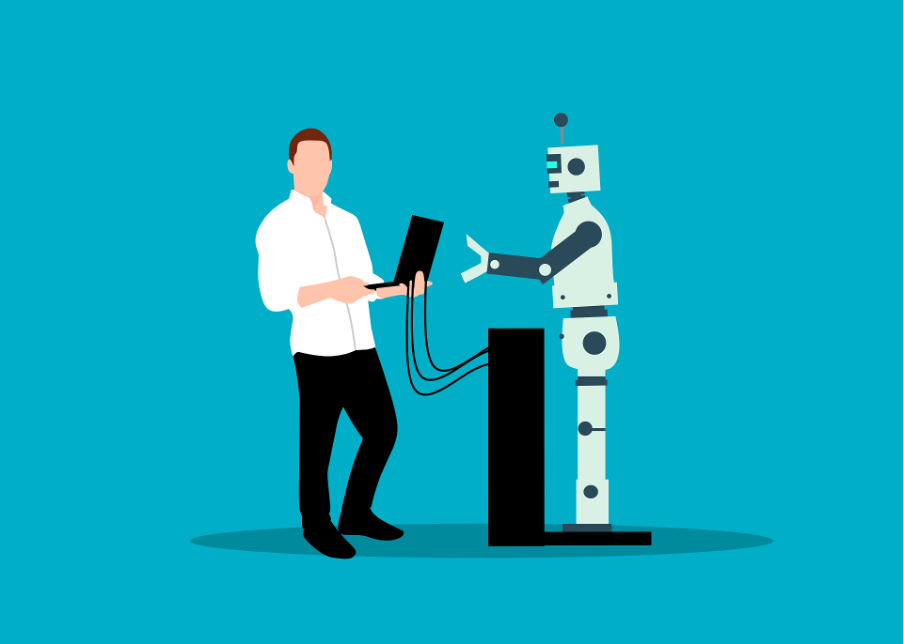
Establishing an AI Coding Standard
To maximize benefits and minimize risks, organizations should define clear standards for AI-assisted development:
Human oversight is mandatory: AI-generated code must always be reviewed and validated by a developer.
Security-first mindset: Sensitive logic, authentication flows, and compliance-related code should receive additional scrutiny.
Transparency: Teams should document where and how AI tools are used in their workflow.
Data protection: Ensure proprietary code is handled in accordance with organizational security policies.
Continuous learning: Developers should treat AI suggestions as guidance, not absolute truth. Critical thinking remains essential.
By formalizing these practices, teams can safely integrate AI into their development lifecycle without compromising quality or security.
Conclusion
AI-assisted coding is not about replacing developers — it’s about empowering them. By automating repetitive tasks, accelerating learning, and supporting best practices, AI tools help teams build better software faster.
When implemented with clear standards and responsible oversight, AI becomes a powerful productivity multiplier. Organizations that embrace AI-assisted development today position themselves for greater agility, higher code quality, and more sustainable engineering practices in the future.
The question is no longer whether AI will become part of the development workflow — it’s how effectively teams will integrate it into their standards and culture.