

Predictive Analytics in Salesforce: How to Forecast Sales with Einstein
Predictive Analytics in Salesforce: How to Forecast Sales with Einstein
Imagine knowing which deals will close next quarter before your reps make a single call. With Salesforce Einstein's predictive analytics, that's no longer wishful thinking it's a competitive advantage any sales team can harness today. As businesses generate more data than ever, the ability to turn that data into accurate forecasts is what separates high-performing teams from the rest.
What Is Predictive Analytics in Salesforce?
Predictive analytics is the practice of using historical data, statistical algorithms, and machine learning to forecast future outcomes. In Salesforce, this capability is powered by Einstein AI. Rather than relying on gut instinct or manual spreadsheet analysis, Einstein processes millions of data points from your CRM to surface actionable predictions right inside your workflow. This includes data from:
-
Past won and lost deals
-
Customer interaction history
-
Pipeline stage progression
-
Email and calendar activity
-
Product and pricing patterns
Key Einstein Features That Power Sales Forecasting
Salesforce Einstein isn't just one tool, it's an ecosystem of intelligent features designed to work together. Here are the core ones every sales team should know:
-
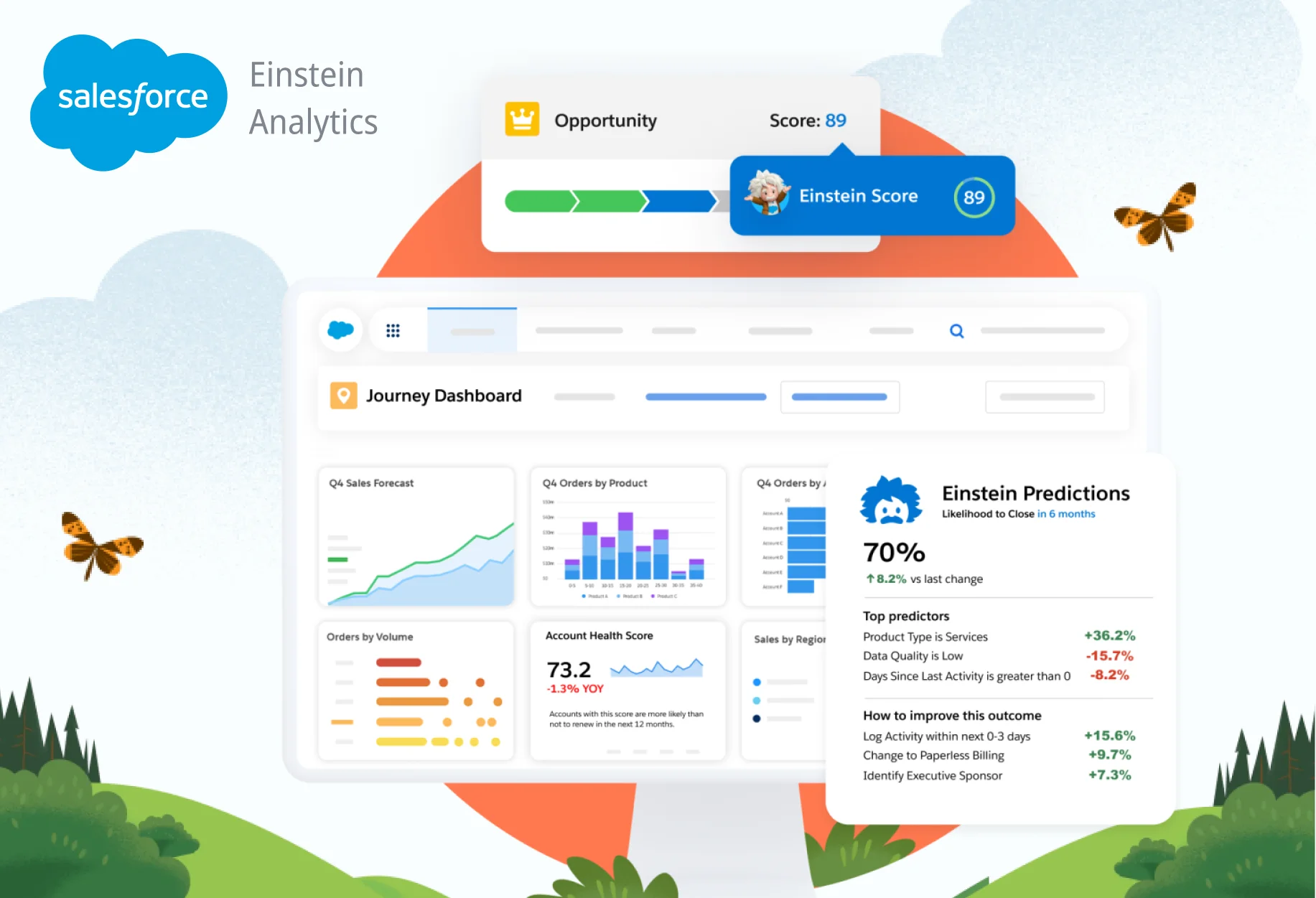
Einstein Opportunity Scoring — Assigns each open opportunity a score from 1 to 99, predicting likelihood of closing based on historical win and loss patterns.
-
Einstein Forecasting — Generates AI-driven revenue forecasts at the rep, team, or company level, adjusting predictions in real time as deals progress.
-
Einstein Activity Capture — Automatically logs emails and calendar events to keep your forecasting data clean and complete.
-
Einstein Deal Insights — Flags at-risk opportunities by identifying warning signs like lack of engagement or stalled deal stages.
-
Einstein Analytics Dashboards — Visualizes pipeline health, deal risk scores, and forecast accuracy in customizable, easy-to-read dashboards.
The recommended workaround is straightforward: develop a Lightning web component and wrap it in an Aura component that simply accesses the unsupported experience, feature, or interface. This hybrid approach lets teams write modern code while staying compatible where needed.
How to Get Started with Einstein Forecasting
Setting up Einstein Forecasting in your Salesforce org is more straightforward than most teams expect. Follow these steps to get up and running:
- 1. Clean your data first. Audit your opportunities for missing close dates, incomplete stages, and outdated records. Einstein's predictions are only as good as the data feeding them.
- 2. Enable Einstein Opportunity Scoring. Navigate to Setup → Einstein Sales → Opportunity Scoring. Einstein will start analyzing your historical data and scoring open opportunities within 24 to 48 hours.
- 3. Activate Collaborative Forecasting. Ensure your forecasting module is live and your sales hierarchy is correctly defined. Einstein Forecasting layers directly on top of this structure.
- 4. Build your Einstein Analytics dashboard. Use pre-built templates or customize your own to give leadership a real-time view of pipeline health and forecast accuracy.
- 5. Review and iterate monthly. Investigate missed predictions, track forecast accuracy over time, and ensure your team is consistently updating opportunity records for better results.
Real Business Impact
The adoption of Einstein's predictive tools is delivering measurable results across industries. Sales managers spend less time chasing pipeline updates and more time coaching based on data-driven insights. Reps know exactly which opportunities deserve their attention and which are unlikely to move.
Teams using Einstein consistently report benefits such as:
-
Significant improvement in forecast accuracy, often by 30% or more.
-
Earlier visibility into at-risk deals before a quarter goes off track.
-
Reduced time spent on manual reporting and pipeline reviews.
-
Better alignment between sales reps and management on deal expectations.
-
More confident, data-backed conversations in leadership meetings.
The Bottom Line: Stop Guessing, Start Forecasting
Sales forecasting has always been part art, part science. With Salesforce Einstein, the science part gets a serious upgrade. By surfacing patterns in your historical data that no human could spot at scale, Einstein gives your team more accurate predictions, earlier risk detection, and smarter prioritization.
The best part? You don't need a dedicated data science team to benefit. If you're already using Salesforce, Einstein is built right in and ready to work with the data you already have. The future of sales isn't about working harder it's about working smarter. And with Einstein's predictive analytics, that future is already here.